Lunation Calendar - Reading

How to Read the Lunation Calendar

Start with the shape of the chart, then let the details come into focus.

The Lunation Calendar presents time as a cycle rather than a grid. Each chart gathers several ways of reckoning time into a single circular form, so relationships between celestial rhythms can be seen at a glance.

Lunation Calendar - Orientation

The basic structure

These charts are meant to be read gradually and revisited often. You do not need to understand every element at once. Begin with the governing cycle, then use the surrounding bands to compare what meets that same point in time.

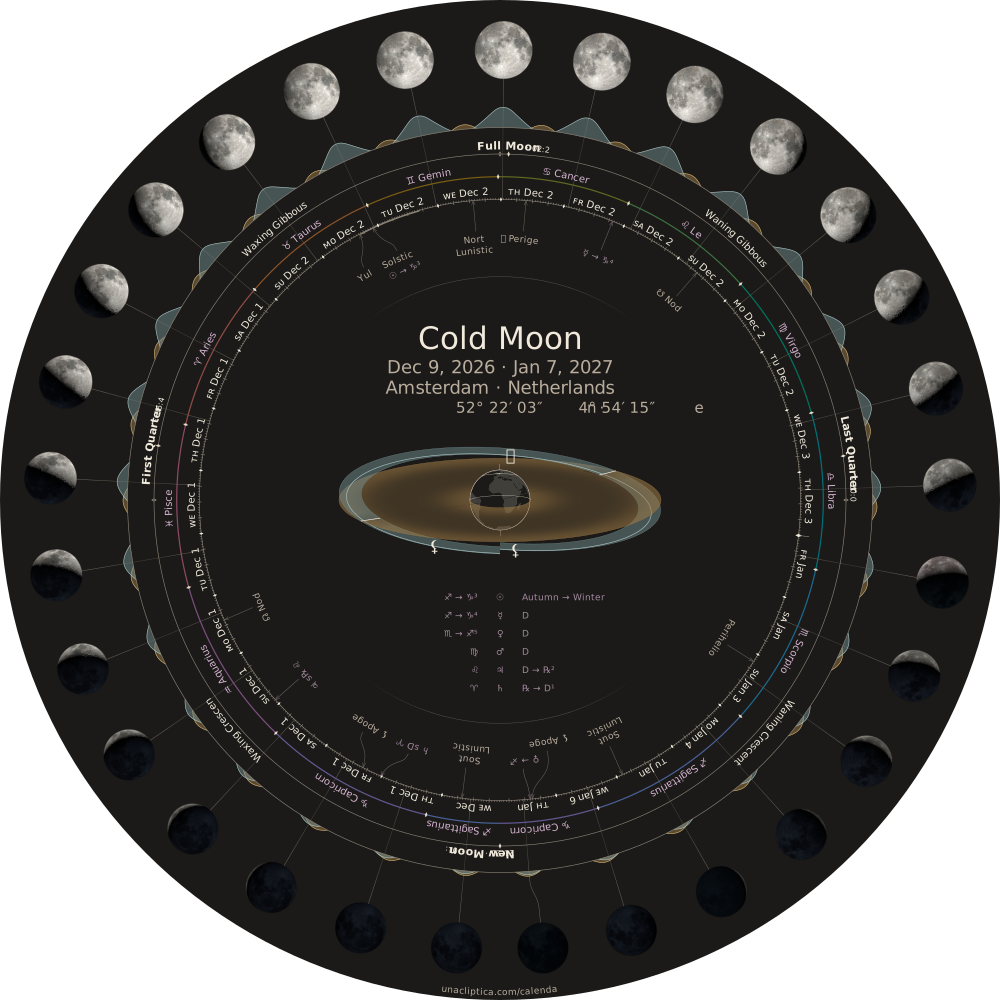
Full Lunation Chart with an arrow showing the direction time moves around the circle.

The Lunation Chart moves from new moon to new moon

Each Lunation Chart covers a single lunation, from one new moon to the next, about 29.5 days. Rather than using the rows and columns of a traditional calendar, time begins at the seam at the bottom of the chart, sweeps clockwise, and finishes again at the bottom.

Ways to use it
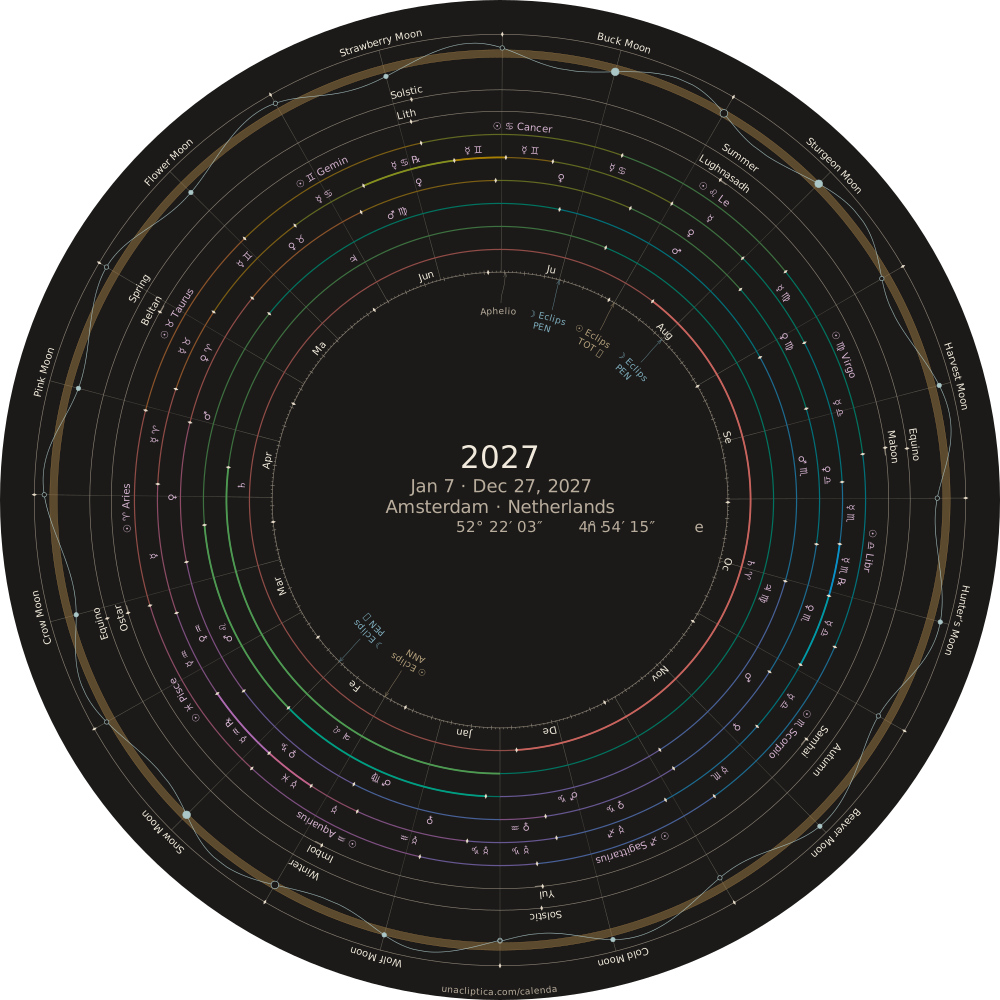
Full Year Chart with an arrow showing the lunar year moving around the circle.

The Year Chart follows the lunar year

Each Year Chart covers a lunar year, from the first lunation of the year to the next lunar year, 12 or 13 lunations later. It uses the same circular structure: time begins at the seam at the bottom of the chart, sweeps clockwise, and finishes again at the bottom.

Compare the chart types
Cropped Lunation Chart showing concentric bands and a radial guide.

An instant is a radial line

A particular moment is represented by a line from the center of the chart to the outer edge. Once you locate that angle, you can trace along it to see what else meets the same instant.

Start with today
Cropped Lunation Chart showing information organized in concentric bands.

Information is organized in concentric bands

Each ring carries a different kind of information: dates, phases, zodiac positions, elevations, events, and other reference systems.

Explore Lunation Chart features
Cropped Lunation Chart showing the Gregorian date band and center date range.

Dates are anchors, not the structure

Gregorian dates help you locate the chart in everyday civil time. The date range in the center tells you what span the chart covers, while the date band lets you find a specific day inside the cycle.

Start with today
Detailed Lunation Chart crop showing continuous patterns and occasional event markers.

Some features flow, others appear

Some features change continuously across the whole cycle. Others mark specific events, crossings, or rare alignments. Read both: the ongoing rhythm and the moments that punctuate it.

What the charts reveal

Lunation Calendar - Lunation Chart

One lunar cycle in detail

A Lunation Chart follows one complete lunation, from new moon to the next. These are the main features to learn first.

Cropped Lunation Chart showing a radial reading across the bands.

Read across the bands

A single position around the circle can be traced inward and outward through several layers of information.

Ways to use it
Cropped Lunation Chart showing the Gregorian date band.

Find the civil date

The Gregorian date band gives you a familiar foothold before you compare that day to lunar, solar, and event markers.

Start with today
Cropped Lunation Chart showing the Moon phase band and moon images.

Notice the Moon phase

The phase band shows the visible shape of the Moon as the lunation grows, culminates, and wanes.

What the charts reveal
Detailed Lunation Chart crop showing Moon and Sun elevation waveforms.

Compare the Moon and Sun in the sky

The elevation waveforms show when each body is above or below the horizon and how high it rises.

See the reveals
Detailed Lunation Chart crop showing a rare event marker.

Look for marked events

Occasional markers call attention to crossings, alignments, or unusual features that may shape how the lunation feels.

What the charts reveal

Lunation Calendar - Year Chart

The year-wide frame

The Year Chart steps back from one lunation. It shows the year as a larger cycle of seasons, lunations, solar motion, planetary motion, and rare events.

Full Year Chart showing the year's lunation sequence.

See the lunations together

The outer lunation structure shows how the Moon's monthly cycles nest inside the larger year.

What the charts reveal
Cropped Year Chart showing seasonal markers.

Locate the seasonal frame

Solstices, equinoxes, and seasonal markers orient the chart to the Sun's annual rhythm.

Ways to use it
Cropped Year Chart showing the Sun in the zodiac.

Follow the Sun through the zodiac

The solar zodiac band gives another way to read the Sun's movement through the year.

See the reveals
Cropped Year Chart showing Gregorian months and the center date range.

Use months as reference points

Gregorian months help anchor the circular year in ordinary calendar language.

Start with today
Detailed Year Chart crop showing rare event markers.

Notice rare alignments

Year-wide event markers show where eclipses, crossings, and other uncommon features sit in relation to the seasonal and lunar cycles.

What the charts reveal

Lunation Calendar - Together

How the two chart types relate

The two chart types use related visual language, but they answer different questions. One expands a single lunar cycle. The other shows where that cycle belongs in the year.

Year Chart with the lunation sequence emphasized.
Year context
Lunation Chart showing one lunar cycle in detail.
Expanded lunation

One lunation sits inside the year

The Year Chart shows the sequence of lunations. A Lunation Chart expands one of those cycles so it can be read in greater daily and symbolic detail.

Review the Lunation Chart
Lunation Chart detail crop.
Daily detail
Year Chart context crop.
Annual context

Detail and context

Use the Lunation Chart for the close reading: daily date, Moon phase, sky position, and nearby events. Use the Year Chart for seasonal context, the sequence of lunations, and year-wide patterns.

Review the Year Chart
Lunation Chart showing circular reading language.
Month-scale language
Year Chart showing similar circular reading language at annual scale.
Year-scale language

Shared language, different scale

Both charts are read around the circle and across concentric bands. The visual grammar is shared, but the governing cycle changes from one lunation to one year.

Practice moving between them

Ways to use it What the charts reveal

Use the Lunation Chart to read the current lunar cycle in detail: phase, date, sky position, and nearby events.

Step back

Use the Year Chart to see where that lunation sits among seasons, solar markers, and the year's sequence of named lunations.

Return and compare

Reading across both charts helps you notice repeated patterns, unusual alignments, and changes that unfold over more than one cycle.

Ways to use it What the charts reveal