


Explorations
Studies in making celestial cycles visible, tangible, and meaningful.
Some Lunacliptica investigations begin with a question: how the heavens move, how we experience that motion from Earth, or how a different representation might make a familiar cycle newly apparent.
Explorations is a home for those questions. Some studies may eventually find their way into physical instruments. Others are worth pursuing simply for the pleasure of understanding and seeing.
Solunar
Two views of the daily journeys of Sun and Moon.
We know the daily rhythm of the Sun almost by instinct: it rises, crosses the sky, and sets. The Moon follows a daily journey too, but its timing and path shift from one day to the next. Sometimes it climbs high; sometimes it barely clears the horizon. In some places, at some times of year, a body may circle the sky without rising or setting at all.
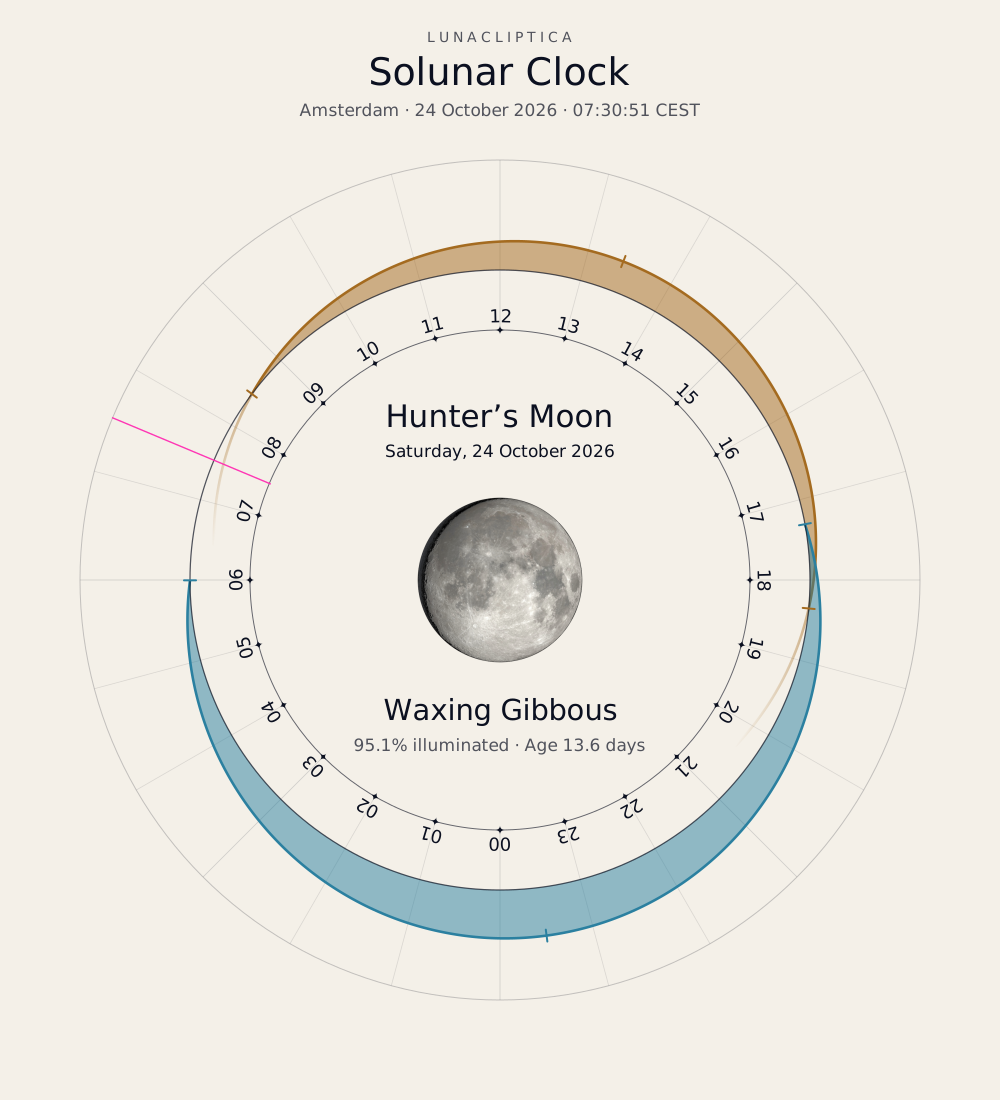
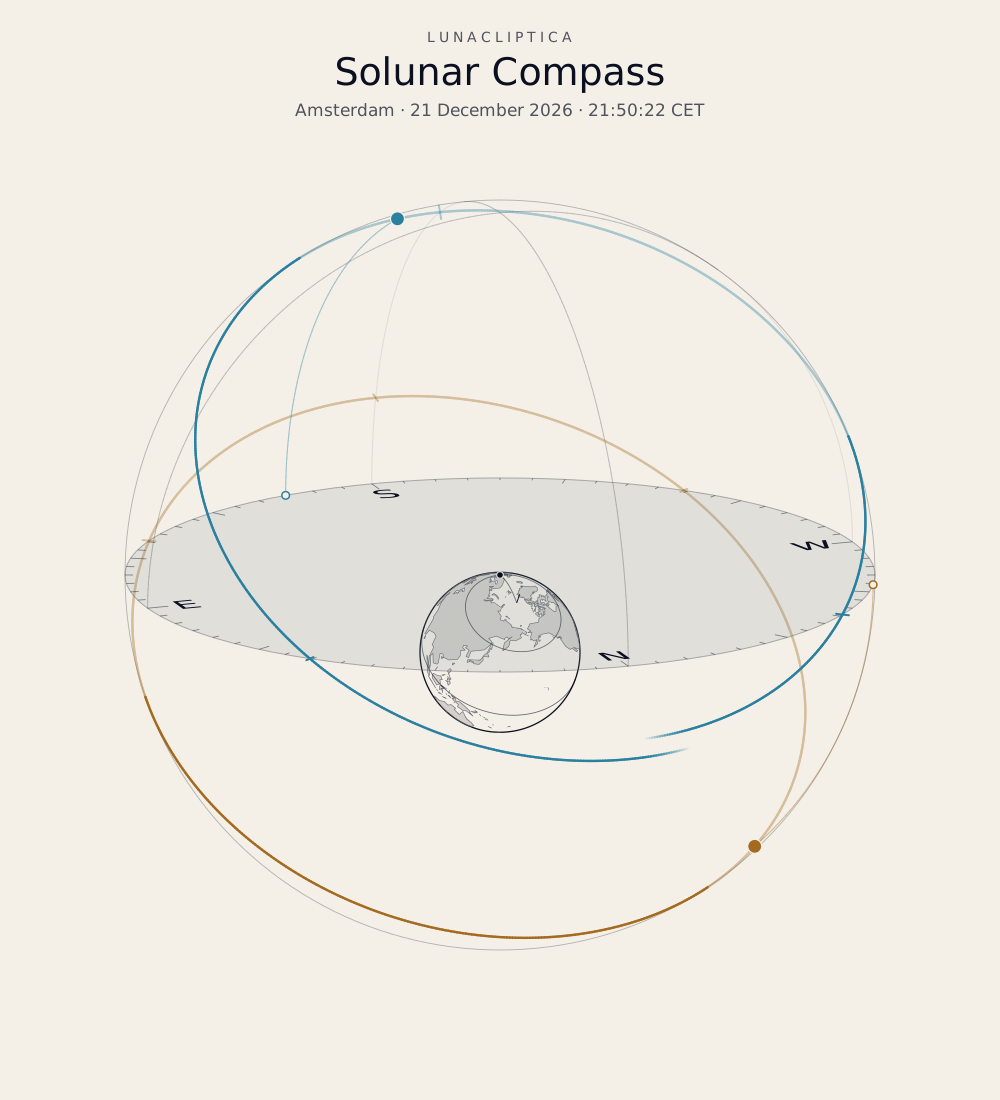
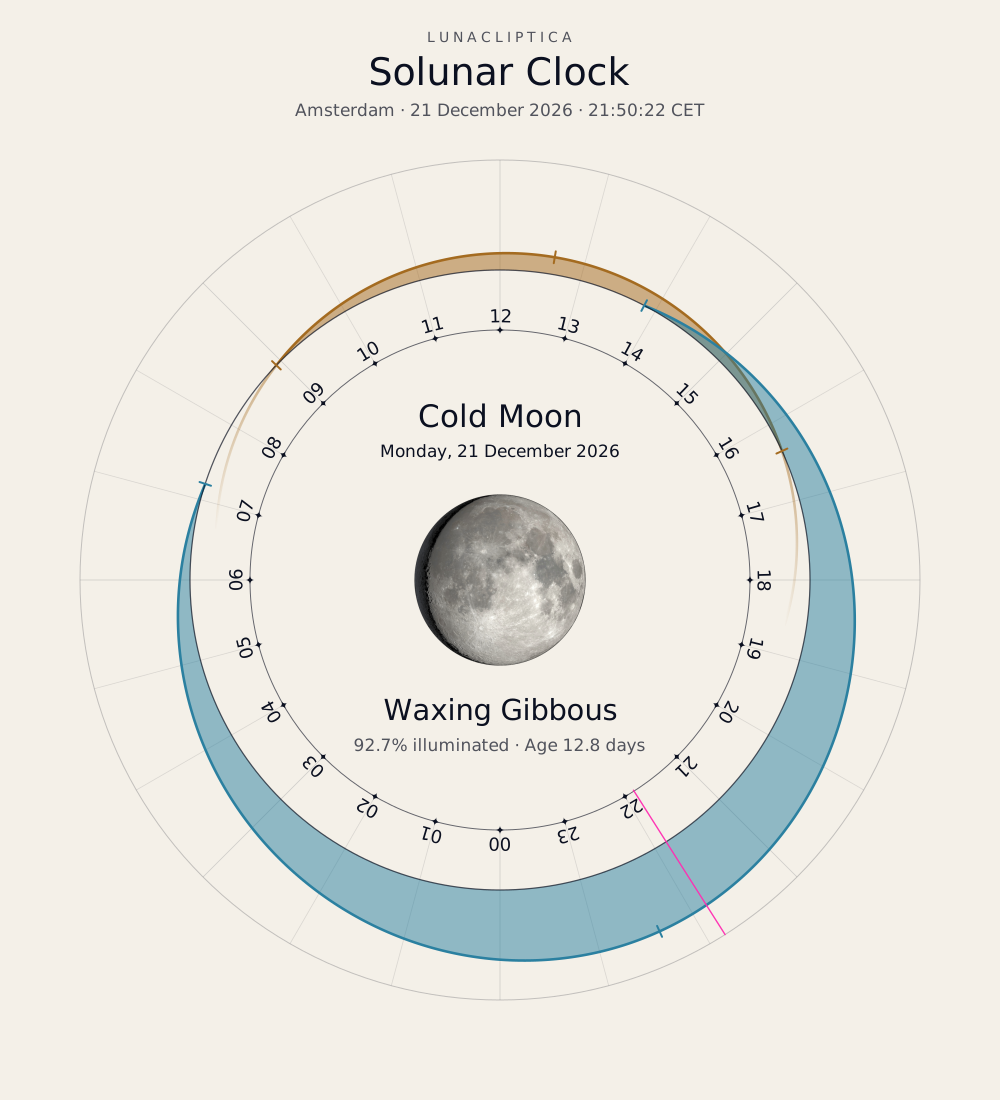
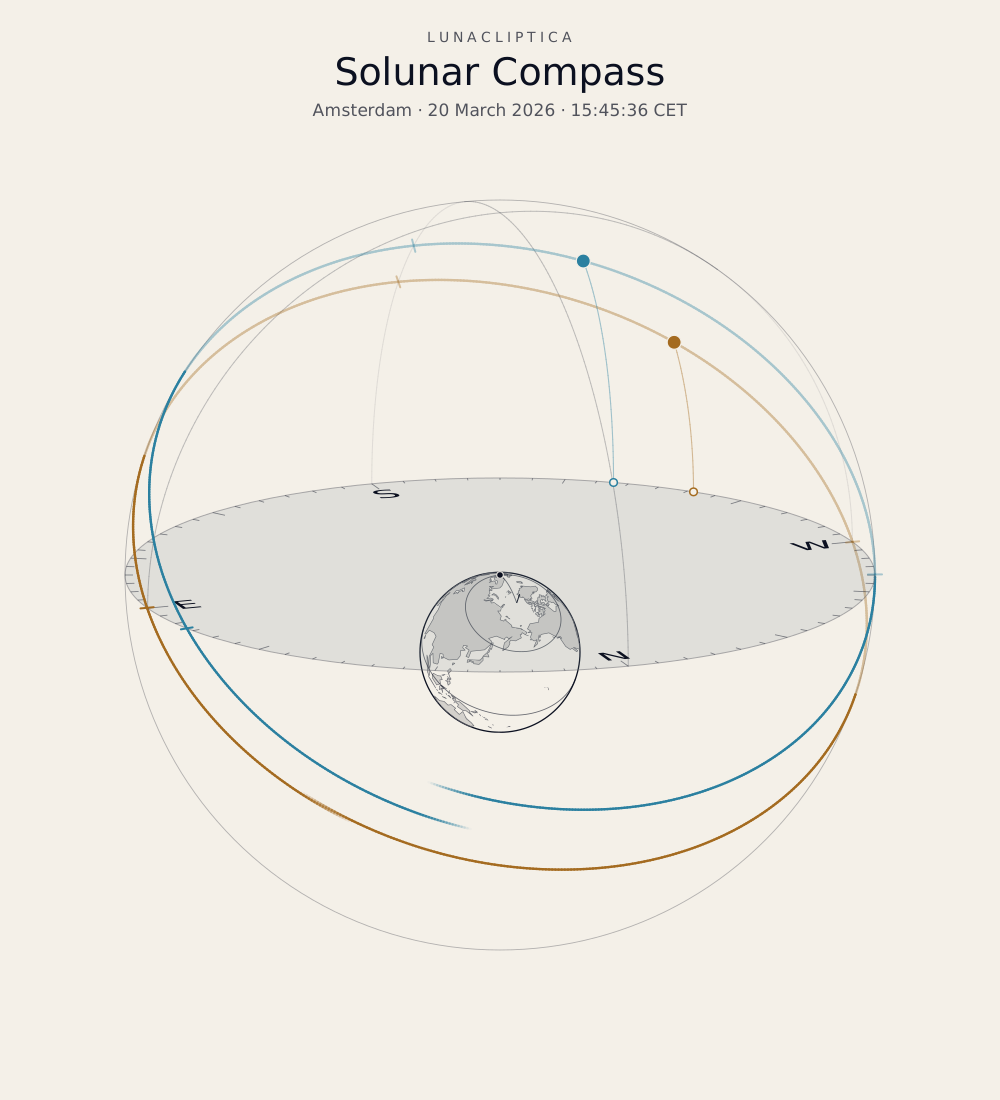
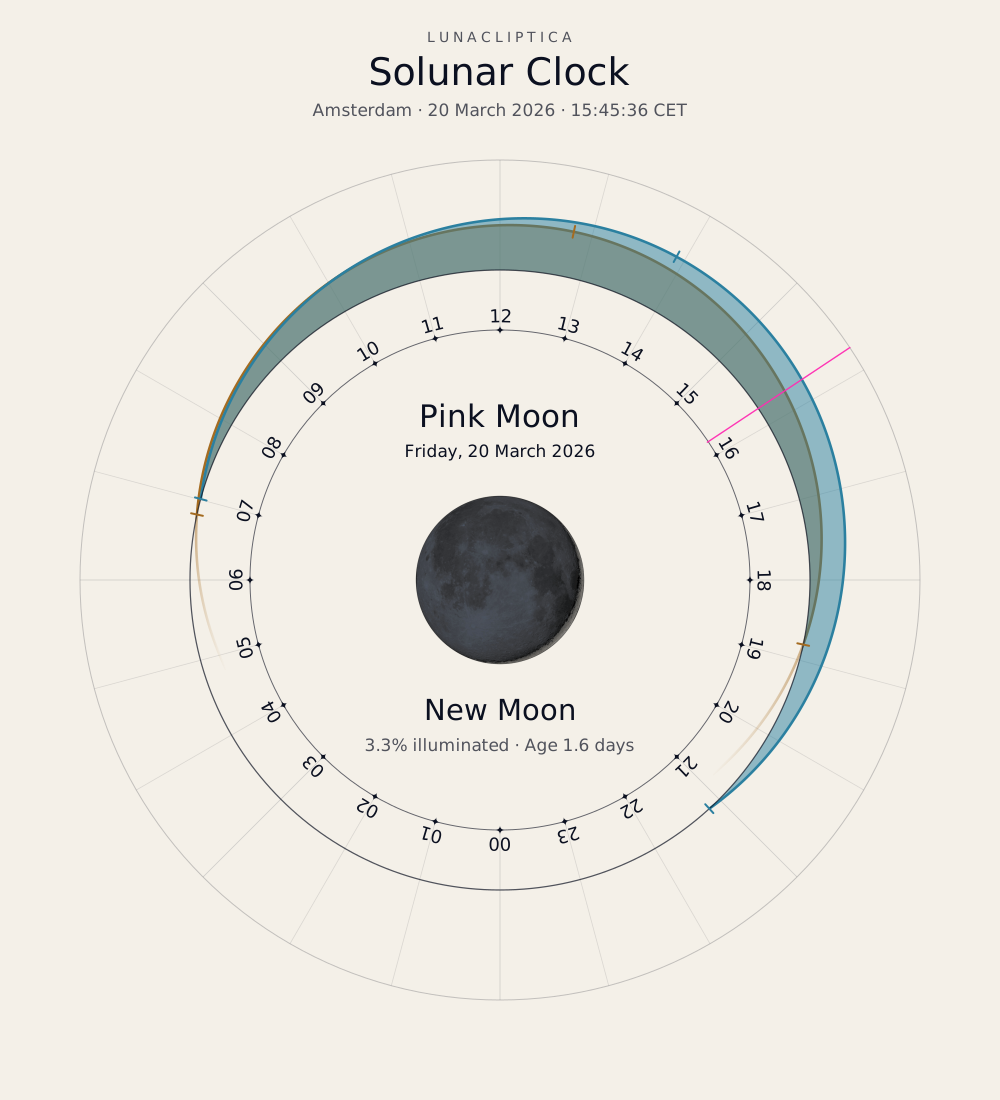
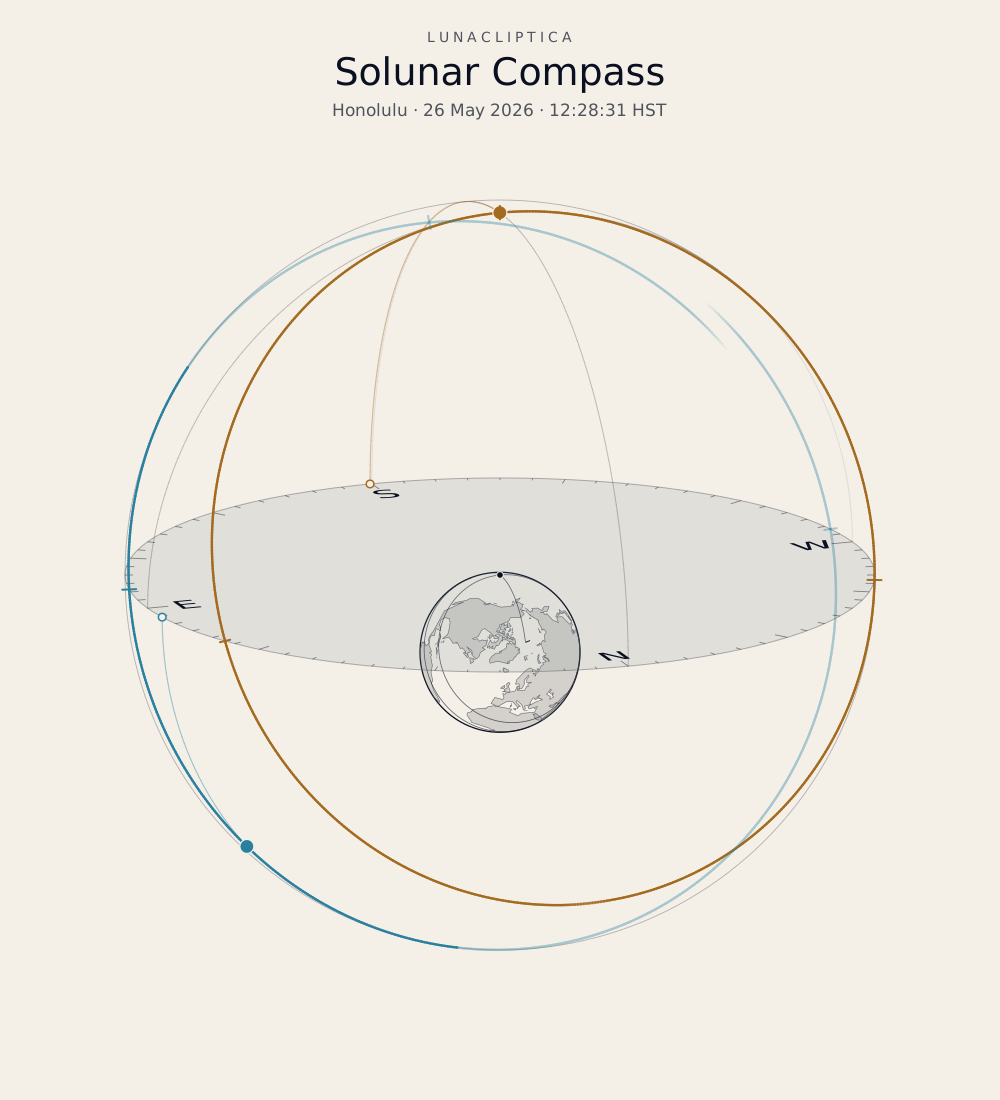
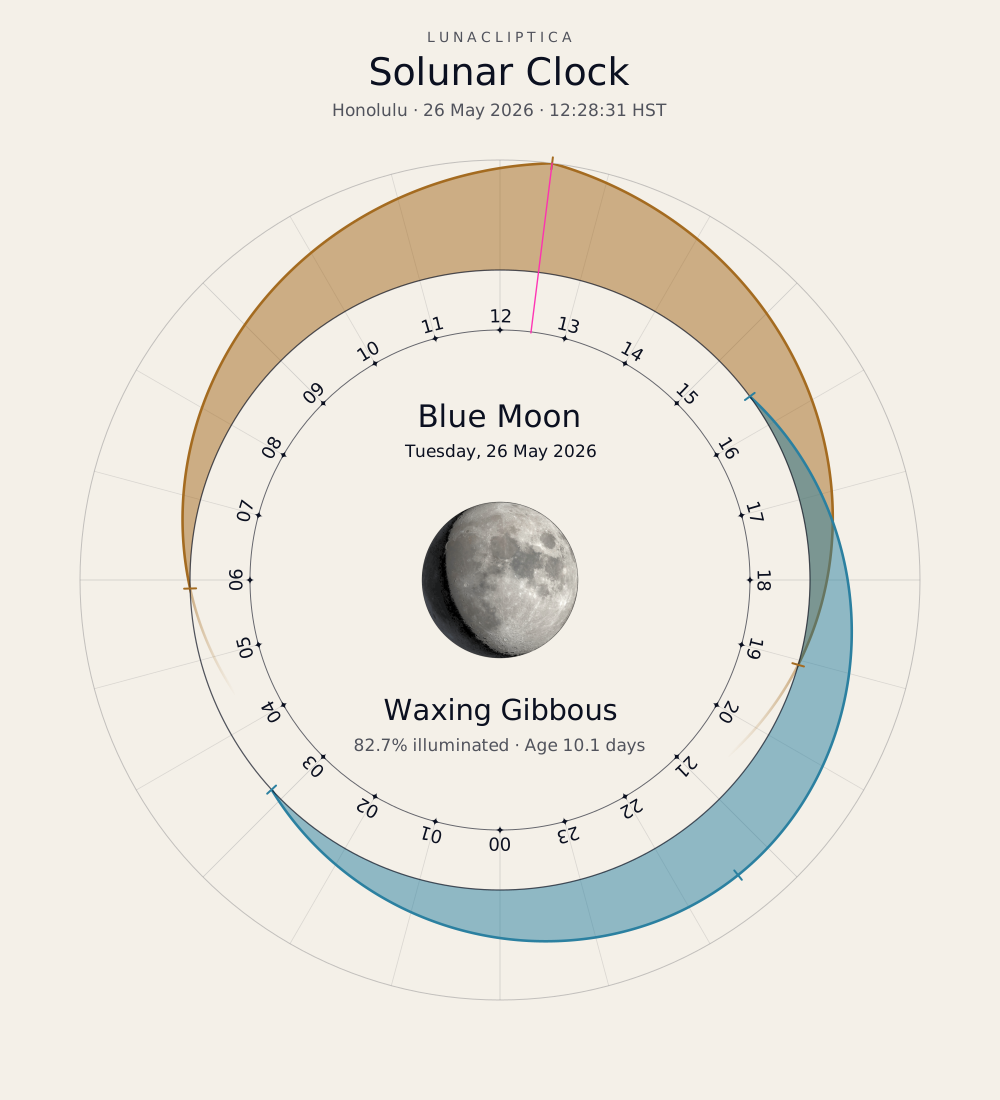
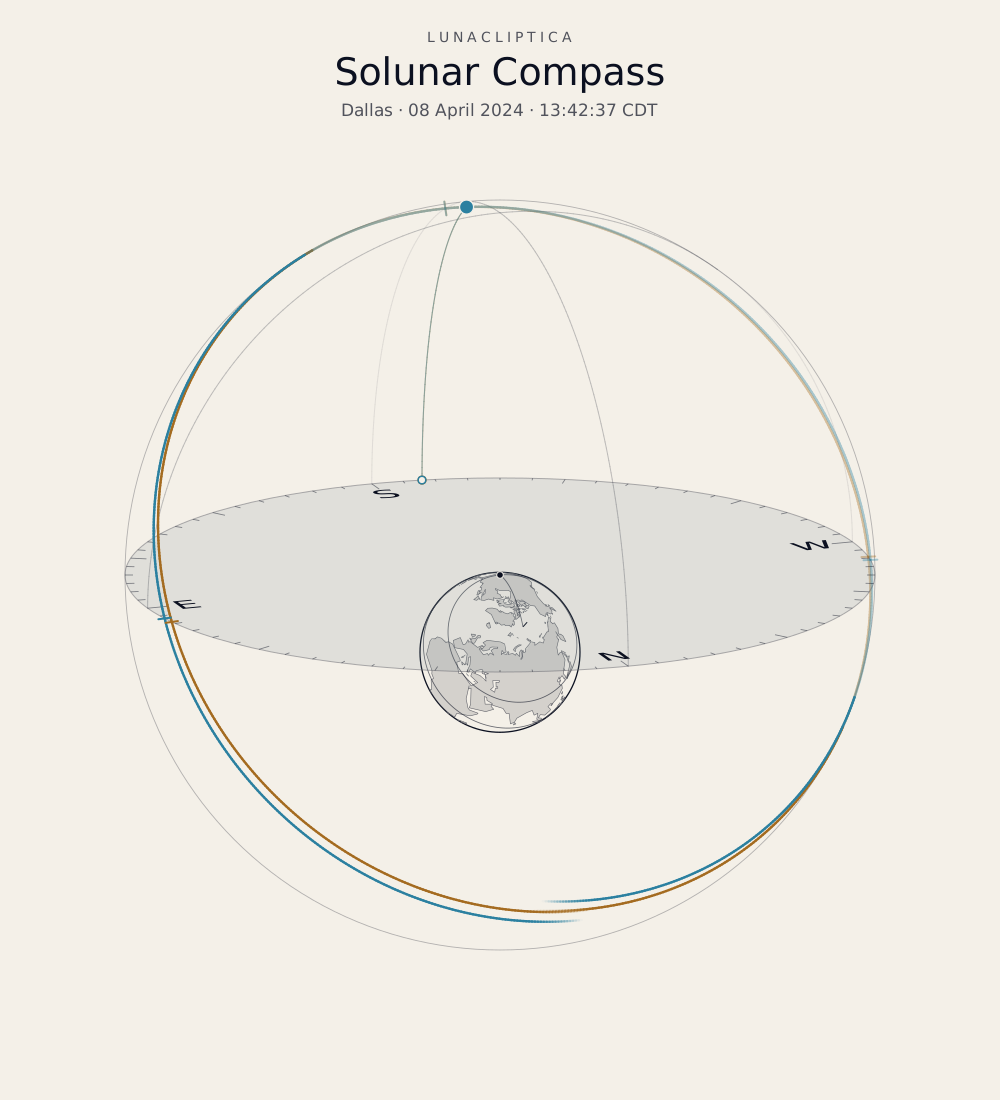
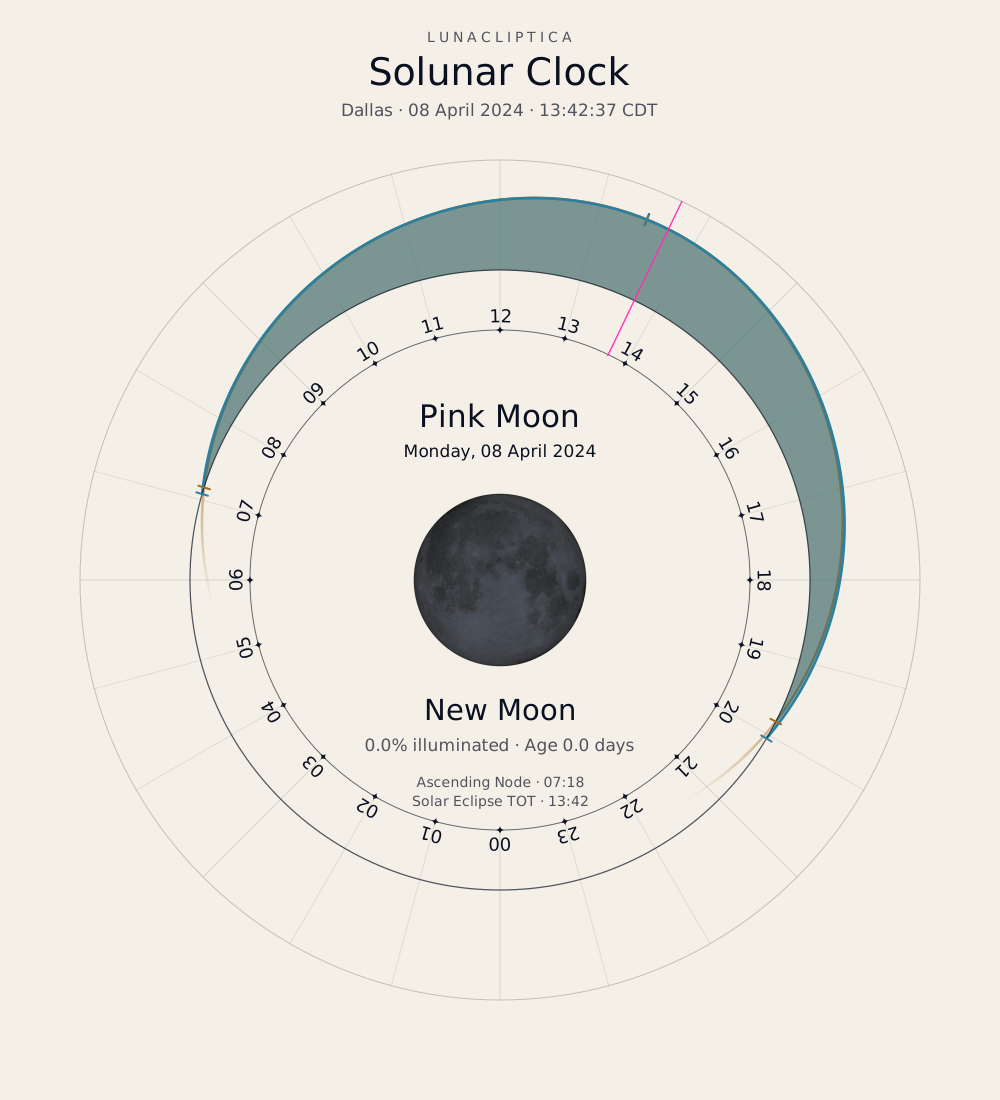
Solunar is an experiment in seeing these journeys from the point of view of an observer on Earth. The Solunar Compass shows the paths themselves, winding around a little Earth and its local horizon. The Solunar Clock unfolds their changing elevations around a 24-hour dial, showing when they climb above and descend below that horizon.
Together, they offer two ways of recognizing where we are within the turning sky.
A day in Amsterdam
These two diagrams describe the Sun and Moon as seen from Amsterdam at the same moment on 24 October 2026. This is a fixed snapshot. Both views use the same observer and captured time.
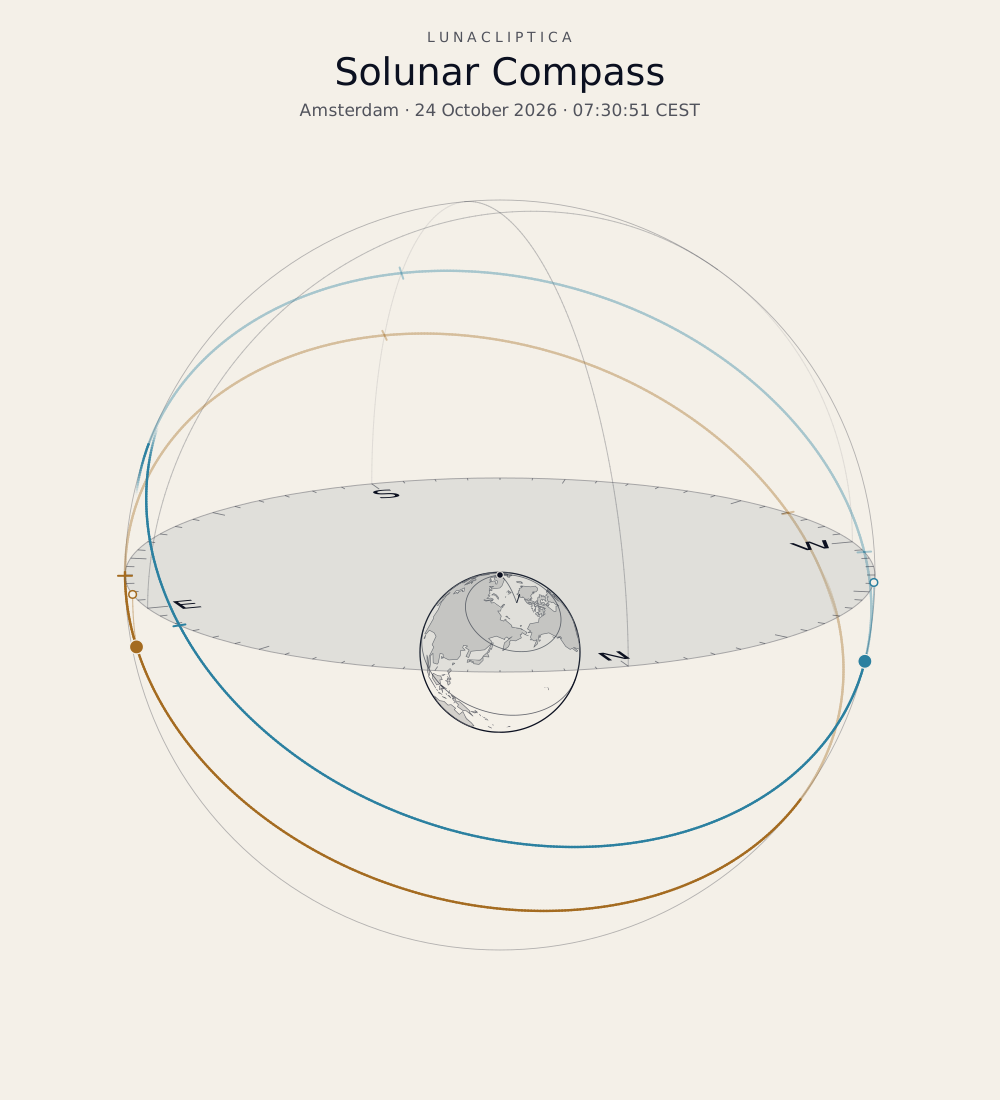
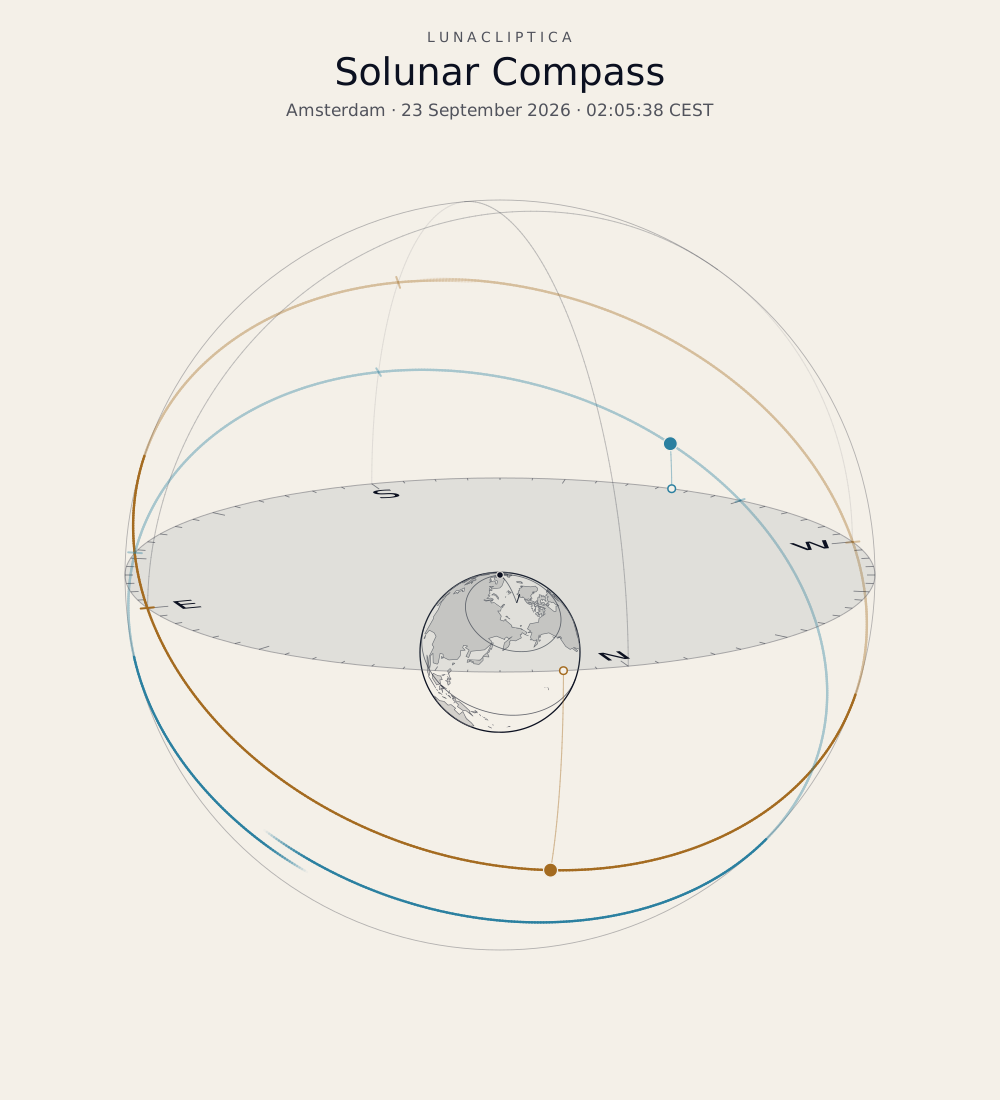
The day in space. In the Compass, a small Earth touches the observer’s horizon plane. Gold and blue traces describe the Sun’s and Moon’s daily circuits; the translucent horizon separates the visible sky from what lies beneath it. Markers locate the bodies at the moment shown.
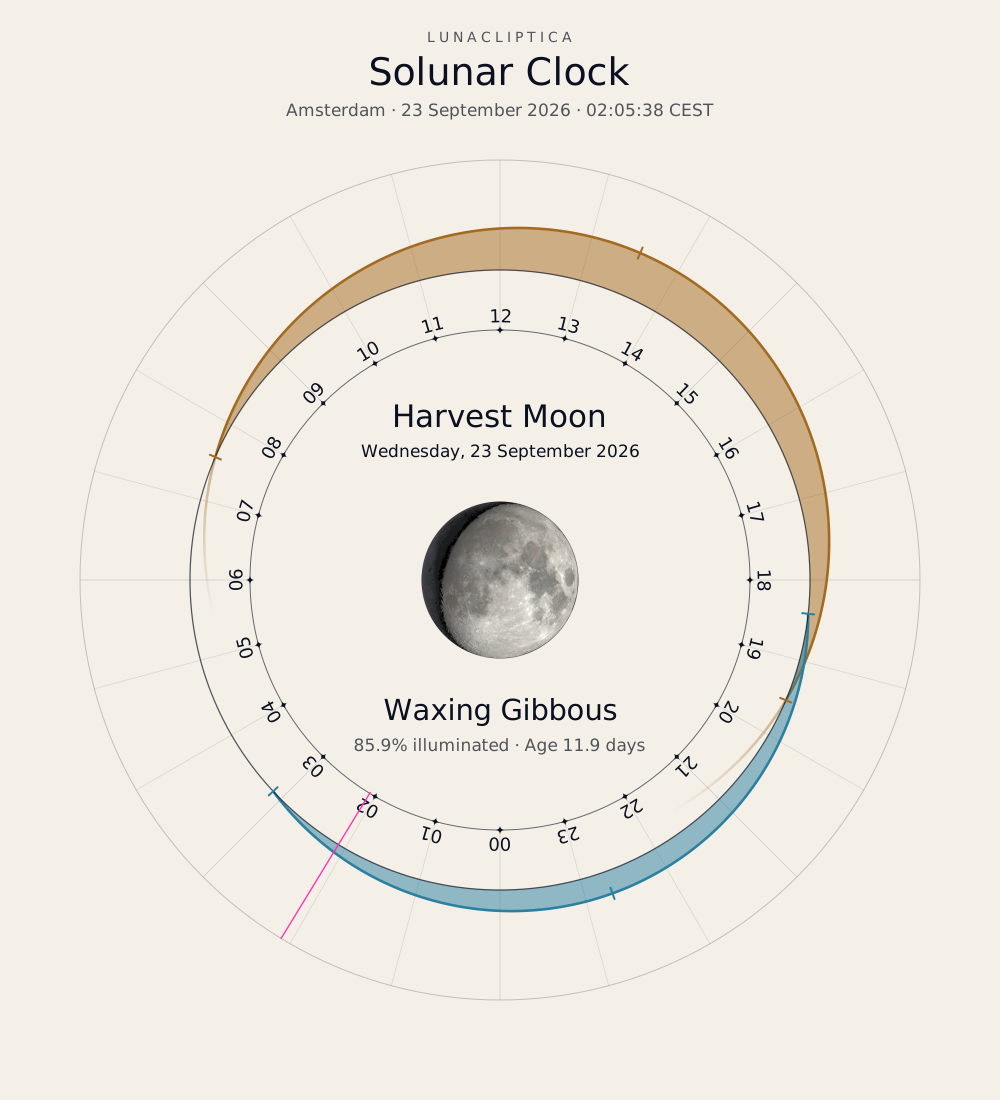
The day in time. The Clock’s dial shows civil hours. The gold and blue curves show the Sun’s and Moon’s elevations, with the horizon as their shared zero line. In the center, the Moon’s phase, illumination, and age place this day within its lunation.
Other skies, other days
The shape of the daily sky depends on where we stand, the season, and the changing geometry of the Moon’s orbit. These fixed snapshots capture moments that reveal different aspects of Solunar’s two views. Each pair shows one place at one instant; all times are local to that place.
Amsterdam through the seasons
Summer solstice
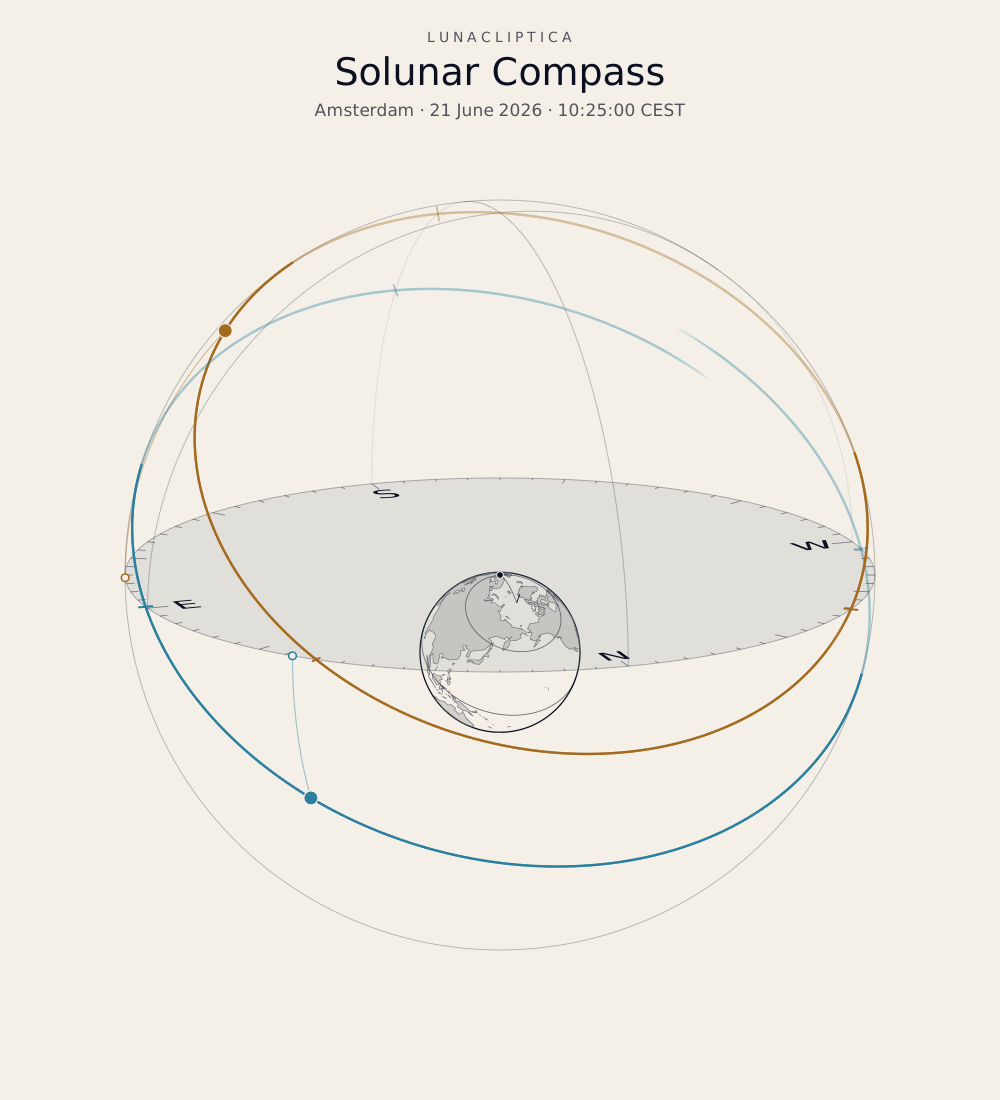
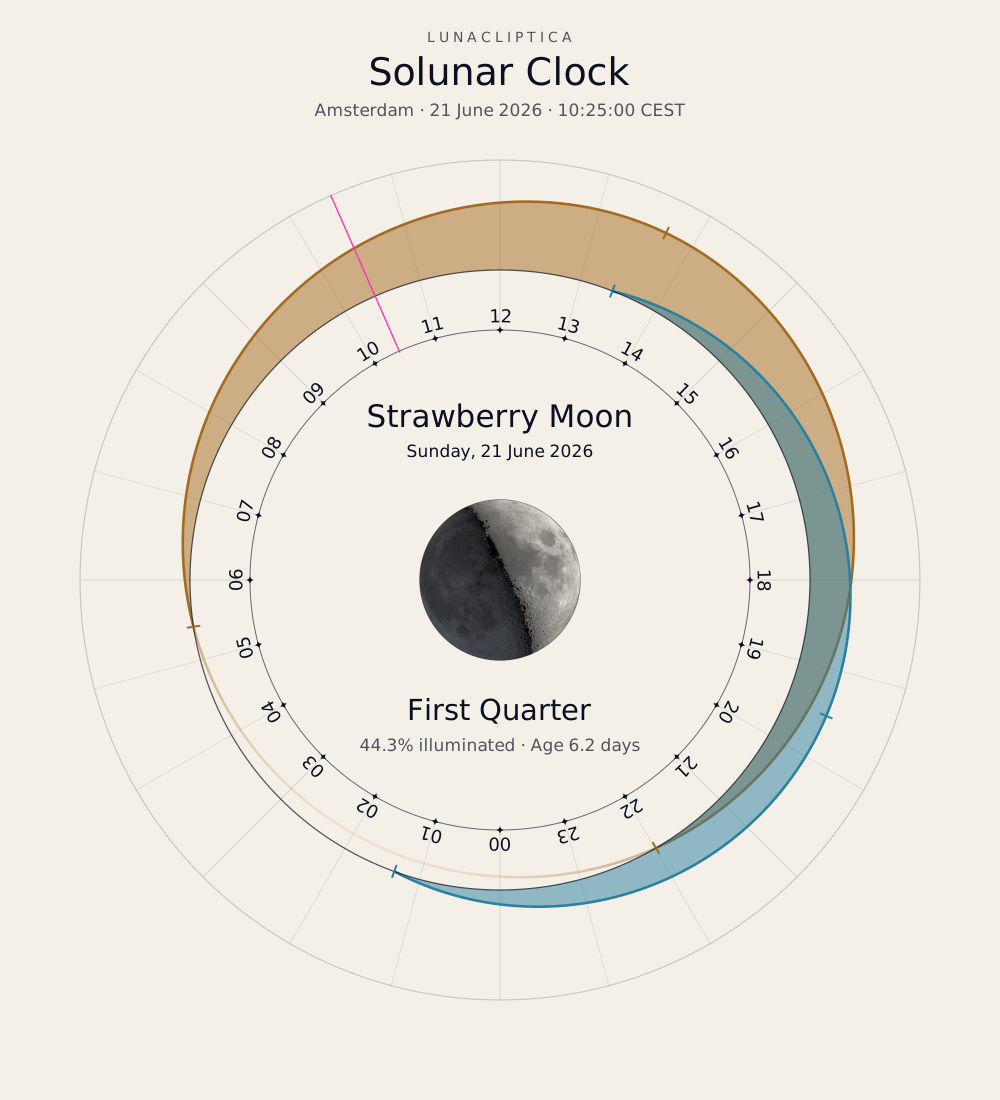
Around the summer solstice, the Sun takes a long, high path across Amsterdam’s sky. Its arc makes the long daylight hours immediately visible.
Winter solstice
Six months later, the solar path is short and low. The same horizon and the same scale make winter’s compressed daylight unmistakable.
Spring equinox
Near the equinox, day and night approach equal length. The Sun’s rising and setting directions move toward east and west.
Autumn equinox
The Sun again crosses the sky on a near-equinox path, but the Moon’s position and daily arc are quite different. The two rhythms are related, not locked together.
Unusual skies
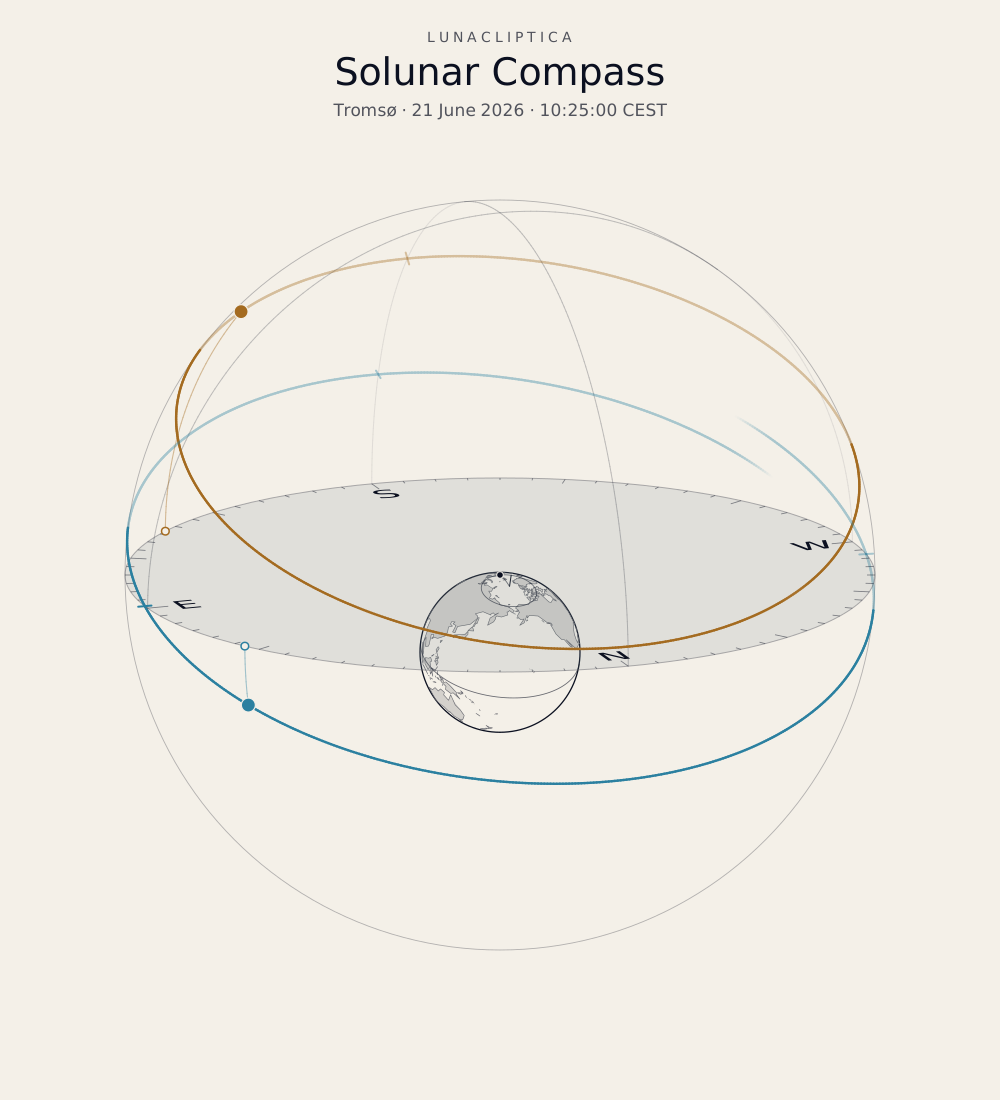
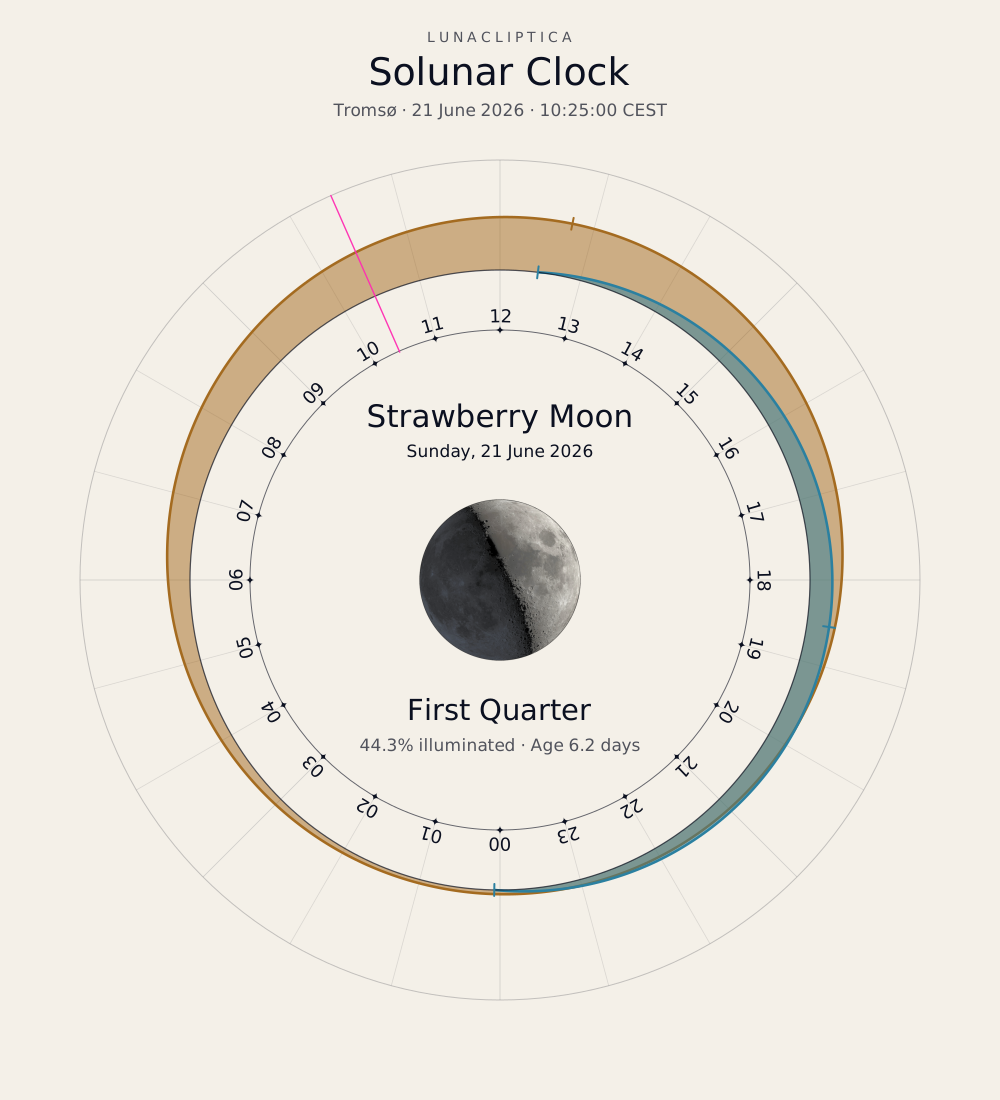
The midnight Sun
Inside the Arctic Circle, summer can bring a Sun that never sets. Its entire daily circuit stays above the horizon, and the usual notions of sunrise and sunset temporarily disappear.
The Sun nearly overhead
At this moment in Hawaiʻi, the Sun passes almost directly through the zenith. Its steep path near the top of the sky offers a different view of the familiar daily journey.
A moment of alignment
During a total solar eclipse, the Moon passes across the Sun as seen from Earth. This snapshot captures their close alignment at local eclipse maximum. Solunar shows the geometry, rather than the changing light during totality.
About the diagrams
Solunar represents the Sun and Moon relative to an observer at a particular place on Earth. The drawings use a mathematical horizon: a body’s rise or set is the moment its center crosses that plane. They do not account for mountains, buildings, atmospheric refraction, or the apparent size of a celestial disk. These crossings may therefore differ from published observational rise and set times.
The diagrams are explorations of celestial geometry, not forecasts of sky visibility or instruments for planning precise observations.
A clock and a compass seem to answer different questions. One tells us when; the other tells us where. But both can describe the same daily turning of Sun and Moon around our place on Earth. Solunar is an invitation to look at that familiar motion from another angle.